The Library of Congress (LOC) provides a useful framework for social studies teachers for analyzing primary sources that guides students through a See-Think-Wonder approach to analysis. On the “Teacher’s Guides and Analysis Tool” page, teachers can find a multitude of worksheets tailored towards specific types of primary sources such as photographs, maps, manuscripts, oral histories, and more.
In this case, I was looking specifically to treat a historical cemetery as the primary source for an activity with my Secondary Methods students, and I realized that the LOC does not have a worksheet tailored to places. As such, if I wanted my students to approach the cemetery as a primary source, I would need to adapt the tool myself.
Adapting the Tool
To rework the familiar LOC framework into a cemetery-specific version, I adapted the questions from the LOC’s generic Primary Source Analysis Tool to guide the students’ work for the day. I created a slide deck using Nearpod, so they could easily access the protocol on their cell phones. For the Observe phase of the analysis (Figure 1), the questions that guided students’ exploration were: What do you notice first? Find something small but interesting. What do you notice that you didn’t expect? What do you notice that you can’t explain? What do you notice now that you didn’t when you first parked? I also asked them to be sure to take photos of things that caught their eyes which they could upload to the Nearpod’s collaboration activity slide. This phase, they did with a partner.
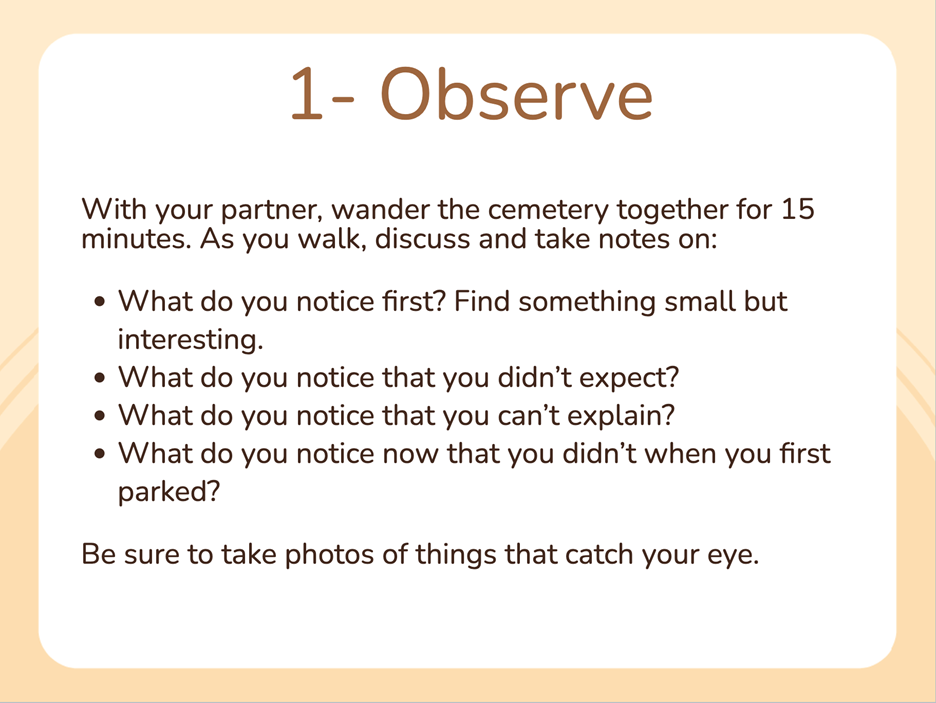
Figure 1: Example slide from my reimagined LOC Primary Source Analysis Tool for Cemetery-Based Education
For the next two phases, I used a Think-Pair-Share format. For the Reflect phase, they answered: Why do you think this space is important? If someone started this cemetery today, what would be different? What can you learn from exploring the cemetery in this way? For the Question phase, I asked them to come up with three to five questions they have. If they were stuck, they had the following prompts which were borrowed from or inspired by the Primary Source Analysis Tool: What do you wonder about? Who do you wonder about? What wonderings related to the past, present, or future do you have? What other place are you thinking about? For the final phase, Further Investigation, I assigned students homework to consider Florida state standards in their content area that they could teach via cemetery-based education.
What Happened in Practice
By rephrasing the tool’s traditional prompts, I created an activity that transformed the cemetery into a rich text for students to analyze. Nearpod’s interactive format meant they could walk the grounds with their phones, answering prompts individually on a blank Primary Source Analysis Tool while still engaging in discussion with a partner. When we used the adapted tool, students’ reflections were thoughtful. They were able to make a wide range of observations related to veteran plots and a veteran memorial, management issues, the wide-open green spaces where unmarked graves were, and more.
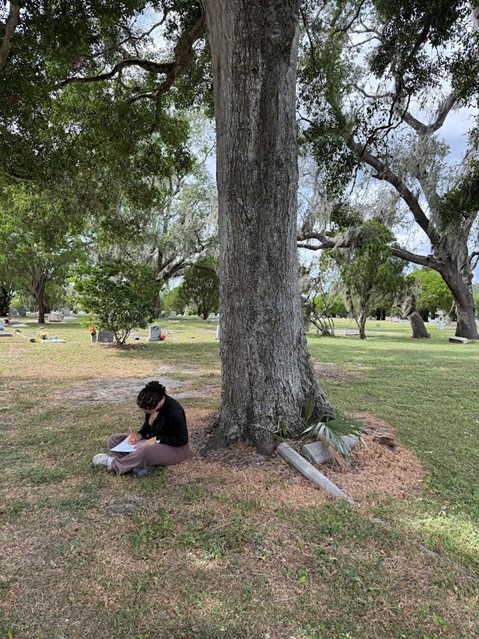
Figure 2: Student participating in a classroom activity focused on cemetery-based education
The following class period, students started brainstorming how they could adapt the tool for their own teaching, not just for a place-based activity, but for anything. Though traditionally used in social studies, all of the students created ways they could reimagine this tool to spark deep analysis and thoughtful discussions with their future students in subjects from math to biology to psychology.
Final Thoughts
Faculty in any discipline can try something similar:
- Take a familiar analytic framework your students already know.
- Consider how it might change if applied differently than normal.
- Use technology (like Nearpod, Padlet, or even a shared Google Doc) to scaffold observations and reflections in real time.
For my class, the result was a learning activity that felt both fresh and accessible and helped my students engage deeply with a space they might otherwise have overlooked. By reworking the Library of Congress Primary Source Analysis Tool for a cemetery setting, I gave my students an entry point into learning about place-based education that was structured and accessible. The activity helped them to think differently about how a space traditionally connected to personal mourning can become a learning space. And in the process, I remembered something too: adaption and imagination can lead to impactful teaching.
Dr. Hillary M. Van Dyke is an assistant professor of education at the University of Tampa. A former middle school teacher and district administrator, she brings over 17 years of education experience to her work. Her passions also include outdoor exploration, traveling, and being an aunt.
References
Getting Started with Primary Sources. Library of Congress. Accessed September 19, 2025, https://www.loc.gov/programs/teachers/getting-started-with-primary-sources/
PRIMARY SOURCE ANALYSIS TOOL. Library of Congress. Accessed September 19, 2025, https://www.loc.gov/static/programs/teachers/getting-started-with-primary-sources/documents/Primary_Source_Analysis_Tool_LOC.pdf
Teacher’s Guide Analyzing Primary Sources. Library of Congress. Accessed January 27, 2026, https://www.loc.gov/programs/teachers/getting-started-with-primary-sources/guides/
Teacher’s Guides and Analysis Tool. Library of Congress. Accessed September 19, 2025, https://www.loc.gov/programs/teachers/getting-started-with-primary-sources/guides/